How to replace worn-out elastic (ski braces)
ID: 169530
Description: After repeated use, some elastics may lose...
Steps:
- Identify the defect and the elastic which need to be replace.
- In our example, the elastic is torn.
- First unclip the buckle.
- Next, use a "seam ripper" tool to cut through the seam on the other end
- Take care: do not damage the fabric with the seam ripper! After cutting all the threads, pull them out from the garment to leave a clean area.
- In this repair we will replace the elastic, but re-use the buckles.
- Carefully remove the buckles by cutting the elastic, and set aside the buckles for later.
- There are two parts to remove: the buckle clip and adjusting loop.
- Select a new elastic band, similar to the previous one in quality and size.
- Get creative: We've demonstrated with the a matching colour for the new strap, but why not pick a bold new colour or pattern?
- Cut same length as the defective elastic band you just removed from your trousers.
- Thread the new elastic through the buckle loop.
- Position the buckle loop at the end of the elastic, with just enough excess strap to bend over and sew in place.
- Use a straight stitch on the sewing machine to sew the folded part of the elastic back onto itself, keeping the buckle loop fastened in location. Repeat this 2-3 times to give several rows of stitching for extra strength. Use a locking stitch at the beginning and end.
- Tip: if your sewing machine has enough power, fold the end of the elastic twice, before stitching. This will result in a neater end, with less chance of fraying.
- Slide the adjusting loop onto the new elastic.
- Take care to slide it on in the correct orientation! (use the other brace, which was not repaired, as reference)
- Click the buckle-clip on the matching part.
- Take the loose end of the new elastic, and offer it up to the hole in the trousers.
- Push the elastic into the hole in the trousers, and make sure it is deep enough to give a secure repair after stitching. (for reference, feel through the trouser to the strap which was not repaired)
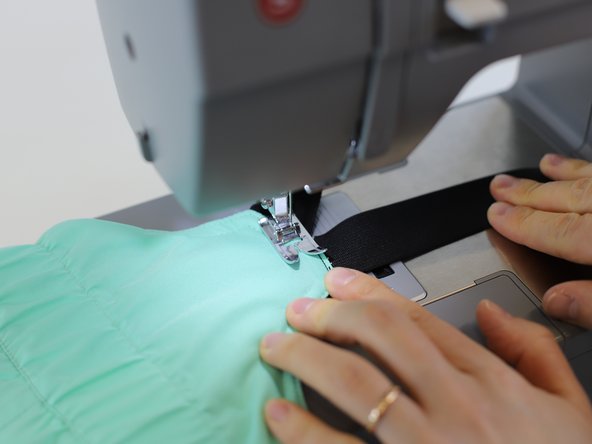
- Use the sewing machine to securely re-attach the elastic to the trouser.
- Tip: Check how the stitching looks on the other (non-repaired) elastic join, and follow this for reference.
- We have demonstrated with a double-line stitching, but box-stitch or other durable construction stitch types will also work well.
- 🛠️🏆👏 Congratulations! The repair is complete, and you're ready to go!