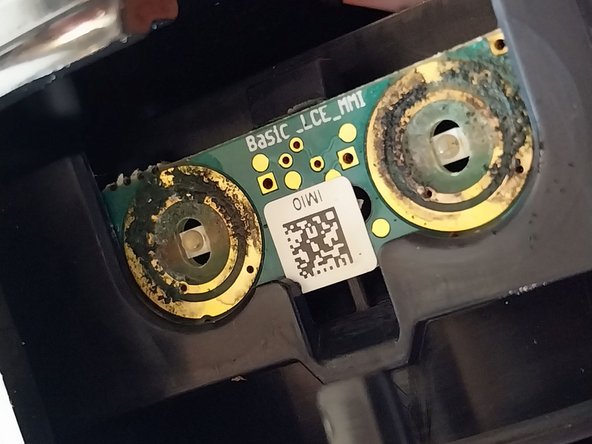
Nespresso machine does not turn on, applies to various similar models, with gunky buttons.
ID: 173826
Description:
Steps:
- A relatively uncommon fault—yet one that can cause problems and lead us to look for the issue in the wrong place—affects various Nespresso coffee machine models: oxidation or sulfation on the power and cup buttons. Since modern coffee machines do not feature a traditional on/off switch, these functions are instead controlled via pushbuttons.
- A problem involving dirt or degradation in the buttons—caused by water leakage—can prevent the machine from turning on, thereby completely masking the true symptom of the fault. It is worth remembering that a machine failing to turn on can be caused by various factors:
- In older machines—specifically those equipped with the switch on the bottom right—a switch failure is unlikely, though still possible.
- Failure: Open thermal fuses. These fuses are located on or adjacent to the boiler; in some machines, the incoming power supply passes through them. If they blow, the unit will not turn on. NOTE: This fault is generally caused by a secondary issue (combined faults) on the electronic control board.
- In some models, the electronic board fails when a varistor burns out, scorching a copper trace on the PCB.
- In older machines, a common failure involves the 470 µF or 680 µF / 400 V capacitor. However—and take note here—this failure is gradual rather than sudden; the cup buttons begin to light up faintly, little by little. There are YouTube videos available regarding this specific fault.
- And finally—returning to Point 2, the subject of this document—regarding the sulfate issue in the two-button keypad: this was caused by water ingress. Since contact cannot be established between the rubber button and the metal contact pad, it is impossible for the unit to power on.
- We can easily check if the button is at fault by disassembling the rubber keypad (2 keys) and bridging the two traces with a metal object; the machine should then power on.
- This KRUPS XN 2100 coffee machine was practically the very first model manufactured by Nespresso; it is highly durable and boasts an excellent repairability rating. It features a power switch located on the side; therefore, if the unit fails to turn on, we can rule out a problem with the two illuminated cup buttons on this specific model.
- Check the cable, power switch, and thermal fuses, and verify that input voltage is reaching the electronic board—specifically at its L and N terminals.
- Video KRUPS XN 2100 REPAIR BUTTONS.
- Siemens Nespresso Coffee Machine TK30 N 01
- This SIEMENS TK30 N 01—one of the earliest Nespresso models—is highly durable and boasts an excellent repairability rating. It features a power switch located on the side; therefore, if the unit fails to turn on, we can rule out any issue with the two illuminated cup buttons. Instead, we should focus directly on checking the following:
- Check the cable, power switch, and thermal fuses, and verify that input voltage is reaching the electronic board—specifically at its L and N terminals.
- YouTube video about the button malfunction.
- Examples of coffee machines where the button issue—the subject of this document—may occur: Nespresso Krups XN 3006 Coffee Machine.
- That model—the XN 3006—along with the XN 304, XN100110, and XN 100, may have a problem at two very different points if they fail to turn on:
- 1. Burnt electronic board, caused by a varistor failure or a problem with sulfated buttons—since the unit lacks a dedicated power switch—so, if we do not observe a burnt varistor on the board, we should look for other causes.
- 2. Having ruled out the possibility that the electronic board has a burnt varistor and/or electronic trace, we must inspect the two-button board to check if the machine has suffered a water leak that damaged it, as shown in Step 13.
- Nespresso KRUPS XN 304 Coffee Machine
- Using the same example we saw in Step 4, if the unit does not turn on, we could be facing one of two problems—either a burnt electronic board or sulfated buttons—since this model does not have an ON/OFF switch.
- Nespresso KRUPS XN 100110 Coffee Machine
- Using the same example we saw in Step 4, if the unit does not turn on, we could be facing one of two problems—either a burnt electronic board or sulfated buttons—since this model does not have an ON/OFF switch.
- Nespresso Krups XN 100 Coffee Machine
- Using the same example we saw in Step 4, if the unit does not turn on, we could be facing one of two problems—either a burnt electronic board or sulfated buttons—since this model does not have an ON/OFF switch.
- Nespresso DeLonghi EN85 B Essenza Mini Coffee Machine
- Using the same example we saw in Step 4, if the unit does not turn on, we could be facing one of two problems—either a burnt electronic board or sulfated buttons—since this model does not have an ON/OFF switch.
- Nespresso Krups XN 110 Coffee Machine* (Various Models)
- In this model, the issues differ slightly: we may encounter a problem with a capacitor on the electronic board—specifically, a loss of capacitance (becoming "decapacitated")—or issues with sulfated buttons due to their proximity to the capsule press, given that this machine lacks an ON/OFF switch.
- Nespresso De'Longhi EN 95.R Coffee Machine and other similar models.
- This coffee maker features an ON/OFF switch on the right side; therefore, if it fails to power on, we can rule out an issue with the two cup buttons. Instead, we should focus directly on checking the power cord, the switch, and the thermal fuses, as well as verifying that input voltage is reaching the electronic control board.
- A faint, dim illumination of the two cup buttons indicates a problem with the large rectangular capacitor on the electronic board—specifically, the 680 nF / 275 V MKP capacitor.
- Insert translation here
- Insert translation here
- Nespresso De'Longhi EN 165 Coffee Machine
- This coffee maker features an ON/OFF switch located on the side; therefore, if it fails to power on, we can rule out an issue with the button panel. Instead, we should focus directly on inspecting the power cord, the switch, and the thermal fuses, as well as verifying that input voltage is reaching the electronic control board.
- I do not have any further details regarding it, since the repair we performed on it at Repai...
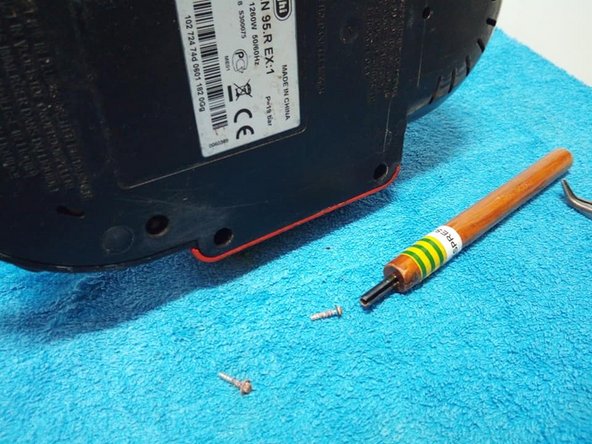
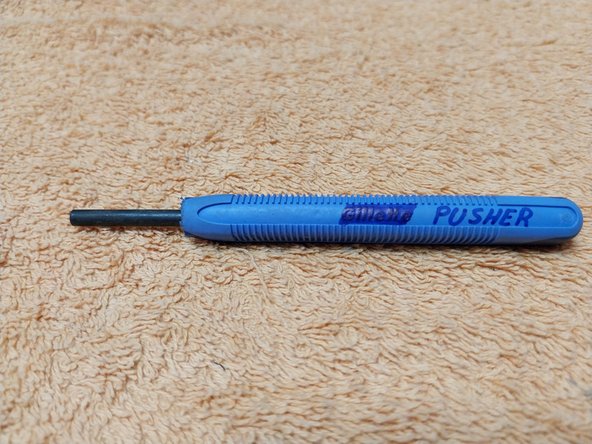
- 1. Homemade Tools Useful for Nespresso Coffee Machine Repairs
- Some homemade tools I’ve made—very basic ones—that are useful for repairing Nespresso coffee machines.
- Thermal Fuses
- One of the first components to check when a coffee maker fails to turn on is the thermal fuses—specifically in models equipped with an ON/OFF switch, as in those without a switch, thermal fuses are typically not the primary cause of the machine failing to power up.
- Although I have saved it for last, here we have the star element of this document: a button panel, or set of two buttons, corroded by a water leak in the coffee maker's capsule press assembly. Since the rubber membrane of the button panel is unable to make electrical contact due to accumulated grime, the coffee maker will not turn on.
- The accumulated dirt and sulfate were cleaned off using fine-grit sandpaper—be EXTREMELY CAREFUL not to damage the central green LED located between the two circles.
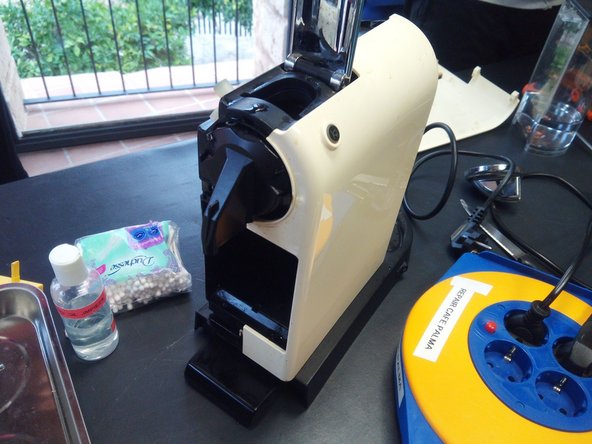
- This was a machine we disassembled at Repair Café Palma that had this specific issue. If we want to test whether it powers on before cleaning the buttons, we can bridge the two traces—for instance, using the tip of a pair of scissors—to simulate a button press. This will allow the machine to power on correctly.
- Other Nespresso coffee machine malfunctions explained in video.
- FIN de la Guía, si me encuentro mas modelos, los añadiré a la Guía.