How to Replace the Thermal Paste in your Mac mini (2024)
ID: 180262
Description: Use this guide to replace the thermal paste in...
Steps:
- Fully shut down your Mac mini and unplug all cables from it.
- Flip over your Mac mini and place it on a clean, flat surface to avoid scratching the chassis.
- Using the Jimmy or other metal tools during this step could scratch the aluminum chassis; however, it's the simplest way to perform this step. Follow the alternate instructions to avoid scratching the aluminum.
- Insert a Jimmy into the gap between the bottom cover and the chassis.
- Pry up the bottom cover to create a gap.
- Alternatively, you can insert the point of a spudger into one of the plastic vent holes and pry up to create a gap big enough to insert an opening pick into.
- Keep the Jimmy inserted under the bottom cover.
- Insert an opening pick into the gap created by the Jimmy.
- Remove the Jimmy.
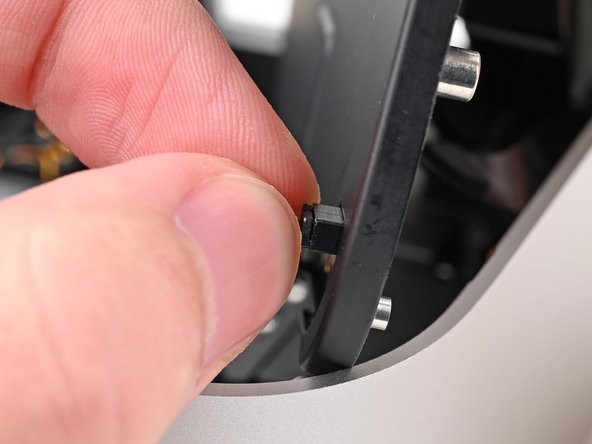
- Slide the opening pick along the bottom cover until you feel it snag on a pin.
- There are four pins total—one at each corner of the bottom cover.
- Twist the pick to lift the pin out of its slot.
- Continue sliding and prying with the pick along the perimeter of the bottom cover to release the remaining pins.
- Don't insert the pick more than an inch when sliding near the power button, as you risk damaging the cable.
- During reassembly, press along the perimeter of the bottom until you hear and feel all four pins click back into place.
- Don't remove the bottom cover, as it's still connected to the Mac mini with a cable.
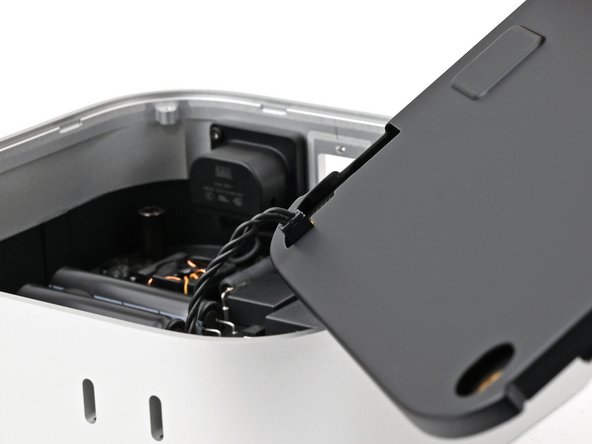
- Lift the edge of the bottom cover opposite the power button and flip it over to expose the power button cable.
- The power button cable is very fragile! You don't have to disconnect it to access the internals— but it will require you to keep the bottom cover propped up.
- To disconnect the cable and remove the bottom cover, follow the next two steps.
- If you don't disconnect the cable, prop up the bottom cover to prevent straining the cable and skip the next two steps.
- Grip the power button cable close to the head and pull it away from its socket to disconnect it.
- Remove the bottom cover.
- Throughout this repair, keep track of each screw and make sure it goes back exactly where it came from.
- While the Mac mini uses Torx Plus screws, standard Torx bits work. Make sure to apply constant, downward force to prevent stripping.
- Use a T5 Torx screwdriver to remove the twelve screws securing the inner plate:
- Eight 3.4 mm‑long screws
- Four 2.4 mm‑long screws
- Insert the point of a spudger into one of the clips' slots on the inner plate.
- Pry up the inner plate enough so you can grip the edge along the same side as the headphone jack.
- Pull the inner plate away from the chassis to slide it out from under the lip on the heat sink.
- During reassembly, slide the inner plate back under the heat sink and press along its edges to secure it in the chassis.
- Don't remove the inner plate yet, as it's still connected to the Mac mini by a cable.
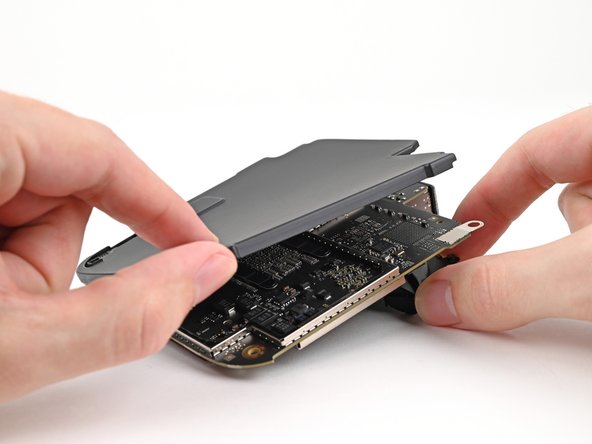
- Lift the inner plate and flip it over to expose the wireless module cable.
- Use one hand to secure the wireless module during this step.
- Use a Torx Plus 5IP screwdriver to remove the four 2.5 mm‑long screws securing the wireless module cover.
- Remove the wireless module cover.
- During reassembly, look the bottom of the cover to find the foam rectangle. Align the foam rectangle over the wireless module press connector to find the proper orientation for the cover.
- Use one hand to secure the wireless module during this step.
- Insert the point of a spudger under one of the short edges of the wireless module press connector.
- Don't insert your spudger anywhere else, as you risk dislodging surface-mounted components.
- Pry up to disconnect the wireless module.
- Remove the inner plate.
- If you're following this guide to clean your fan, this is a good time to do so.
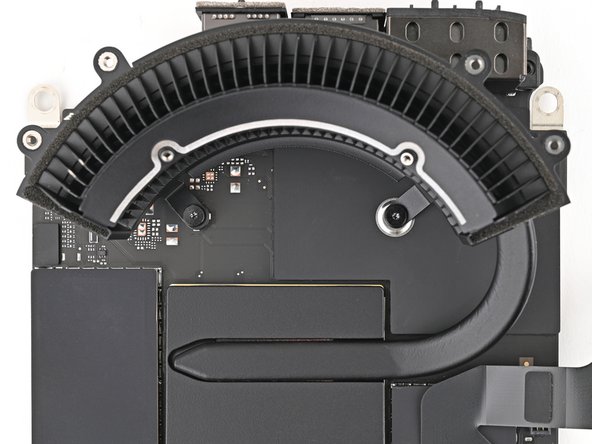
- Remove the four screws securing the fan:
- Two 2.4 mm‑long Torx Plus 3IP screws
- Two 7.9 mm‑long Torx Plus 5IP screws
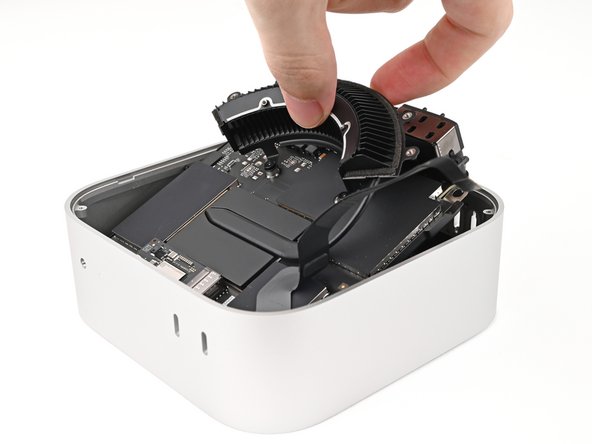
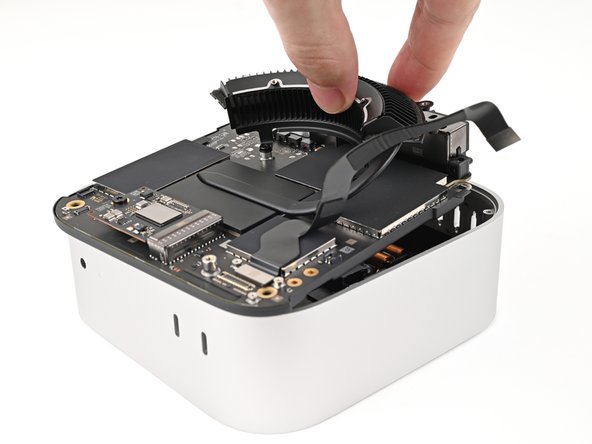
- Lift the fan out of its recess in the chassis and flip it over to expose its wire and connector.
- Let the fan rest on the chassis and heat sink.
- Use tweezers to peel back the tape covering the fan ZIF connector.
- Use the point of a spudger, or your fingernail, to flip up the locking tab on the fan ZIF connector.
- Use tweezers, or your fingers, to slide the ZIF connector straight out of its socket.
- Remove the fan.
- Use a Torx Plus 3IP screwdriver to remove the two 2.2 mm‑long screws securing the headphone jack cover.
- Use tweezers, or your fingers, to remove the headphone jack cover.
- Use the point of a spudger to pry up and disconnect the headphone jack press connector.
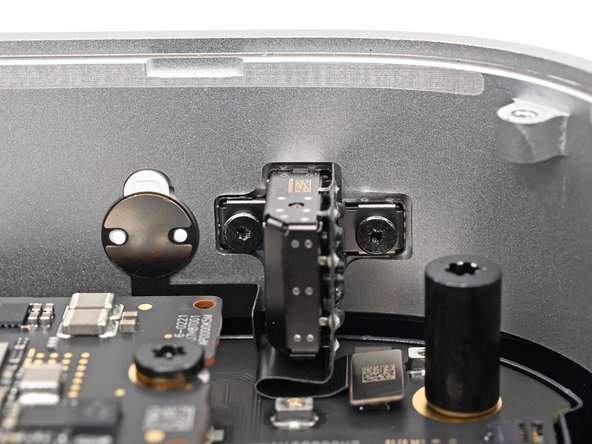
- Use a Torx Plus 3IP screwdriver to remove the two 4.0 mm‑long screws securing the headphone jack.
- If you aren't using a flexible adapter, make sure your screwdriver is as parallel with the screw as possible. Apply constant force against the screw to avoid stripping.
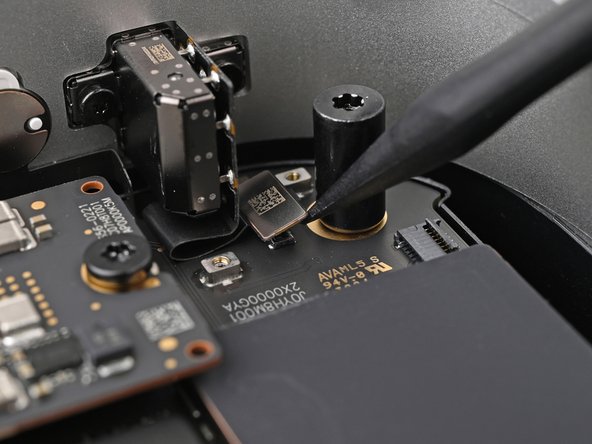
- The power indicator light is connected to the headphone jack and requires separating its adhesive to continue.
- Apply a few drops of isopropyl alcohol (>90%) to the top of the power indicator's silver plate.
- Wait one minute for the alcohol to flow behind the power indicator and for the adhesive to loosen.
- Slide a Jimmy between the top of the power indicator and the chassis to separate the adhesive.
- During reassembly, align the power indicator's holes over the white pegs in the chassis. If the old adhesive isn't sticky anymore, use a thin double-sided tape like Tesa Tape to replace it.
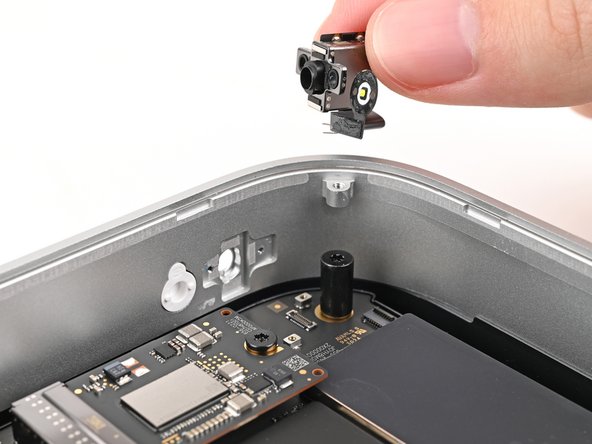
- Lightly grip the power indicator with tweezers and pull it away from the chassis to separate the adhesive securing its cable.
- Lift the headphone jack out of the chassis and remove it.
- Use a Torx Plus 5IP screwdriver to remove the three screws securing the speaker:
- Two 4.1 mm‑long screws
- One 3.7 mm‑long screw
- Grip the speaker and slide it out from under the heat sink.
- Pull the speaker over the edge of the chassis to expose its cable and its connector.
- Rest the speaker on the edge of the chassis.
- Grip the speaker cable close to the head and pull it away from its socket to disconnect it.
- Remove the speaker.
- Remove the four screws securing the USB-C port cover:
- Three 2.2 mm‑long Torx Plus 3IP screws
- One 9.2 mm‑long Torx Plus 8IP screw
- Use tweezers, or your fingers, to remove the front USB-C port cover.
- Use the point of a spudger to pry up and disconnect the front USB-C ports press connector.
- Use a Torx Plus 3IP screwdriver to remove the four 4.7 mm‑long screws securing the two front USB-C ports.
- If you aren't using a flexible adapter, make sure your screwdriver is as parallel with the screw as possible. Apply constant force against the screw to avoid stripping.
- Use the point of a spudger to pry the front USB-C ports from their recesses in the chassis.
- During reassembly, gently press the USB-C ports into their recesses until they click into place.
- Pull the front USB-C ports out of the chassis and remove it.
- Remove the six screws securing the logic board:
- Three 6.8 mm‑long T8 Torx screws
- One 16.2 mm‑long T8 Torx screw
- Two 4.2 mm‑long T5 Torx screws
- Grip the heat sink and pull it away from the edge of the chassis to release the pegs in the rear ports.
- Don't fully remove the logic board from the chassis yet, as it's still attached by a cable.
- Lift the rear port side of the logic board out of the chassis before sliding the opposite end out.
- During reassembly, insert the edge of the logic board opposite the rear ports into the chassis before pressing it down flat.
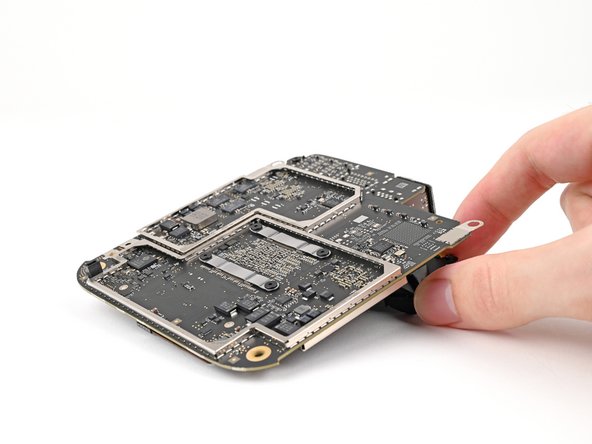
- Turn the logic board over to expose the power supply cable connector.
- Use your fingers to grip the power supply cable connector and pull it straight out of its socket to disconnect it.
- Remove the logic board.
- The rubber cover on the bottom of the logic board is secured with adhesive along its copper pads.
- Flip over the logic board.
- While securing the logic board with one hand, use the other to peel off the rubber cover.
- If pieces of the copper rip and stick to the logic board, don't worry! Keep the copper in place, as it'll fill in the gaps on the rubber cover during reassembly.
- Use one hand to secure the logic board during this step to prevent damaging it.
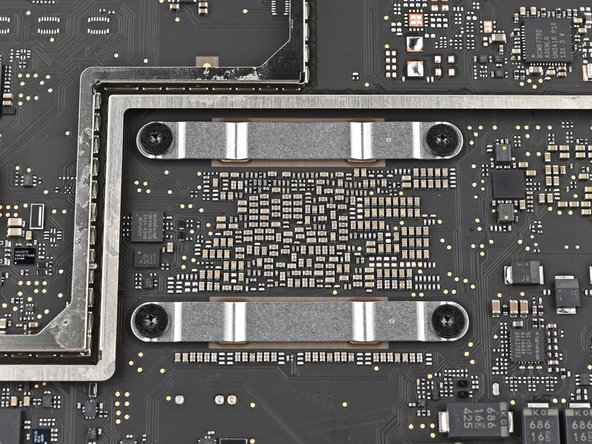
- Use a Torx Plus 5IP screwdriver to remove the four 4.4 mm‑long screws securing the heat sink bracket.
- The brackets will bend up as you loosen the screws.
- During reassembly, tighten the heat sink bracket screws in an "X" pattern.
- Use tweezers, or your fingers, to remove the heat sink brackets.
- Flip over the logic board.
- Use a Torx Plus 5IP screwdriver to remove the two 4.0 mm‑long screws securing the heat sink.
- Lift the heat sink off the logic board and remove it.
- You might feel a little resistance from the thermal paste bonded to the heat sink.
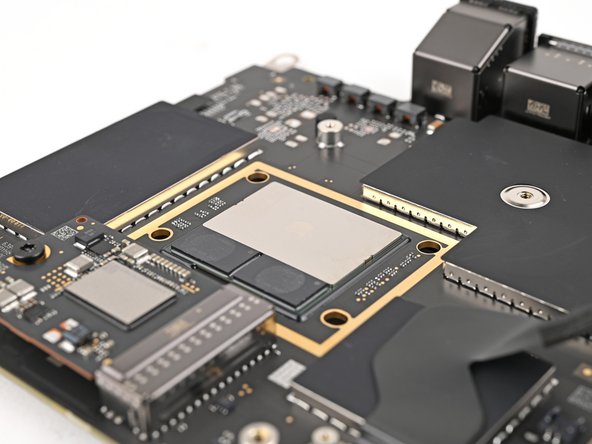
- Use the flat end of a spudger to scrape off the old thermal paste from the processor.
- Apply a few drops of isopropyl alcohol (>90%) to the processor and use a coffee filter or a lint-free cloth to wipe away any residue.
- Repeat this step for the thermal paste on the heat sink.
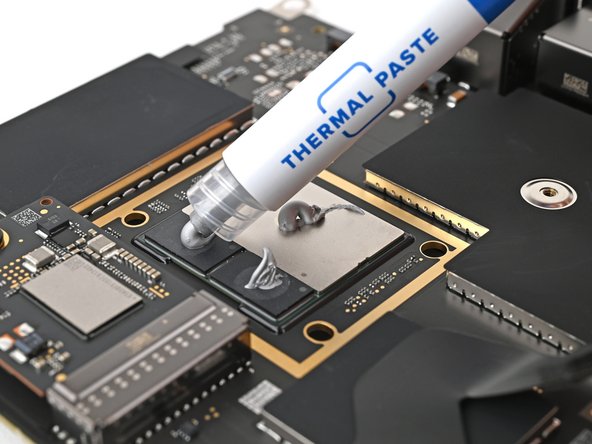
- Apply a small bead of thermal paste to the each of the three locations on the processor.
- Follow this guide in reverse order starting with this step to reattach the heat sink. Placing the heat sink back on the processor will evenly spread the thermal paste and bond both parts together.