Framework Laptop 16 Top Cover Replacement
ID: 205696
Description: Use this guide to replace the Top Cover in your...
Steps:
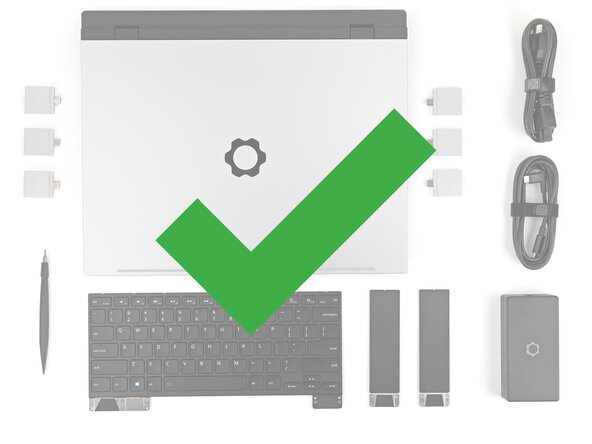
- Unplug all cables and fully shut down your laptop.
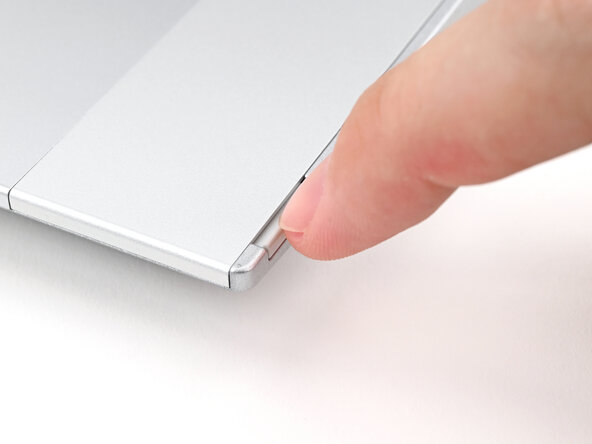
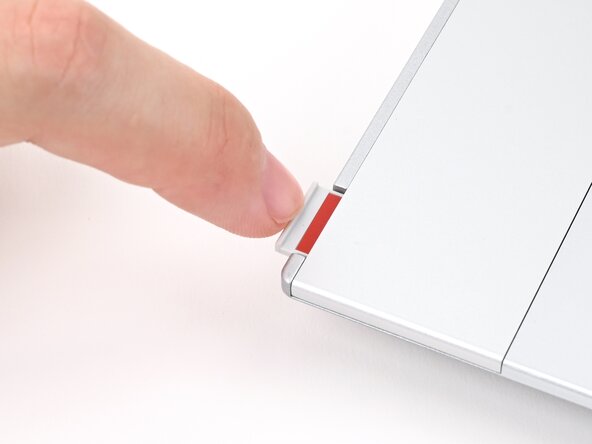
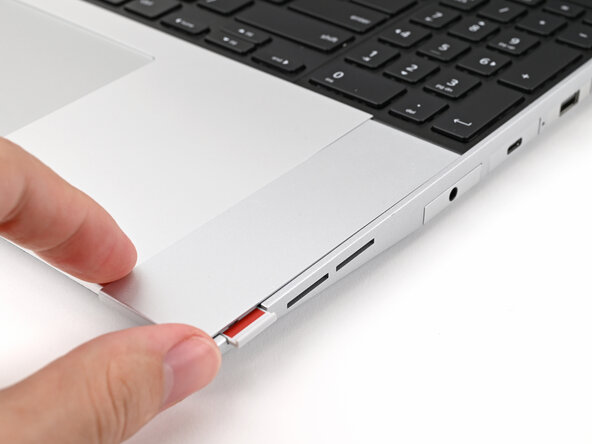
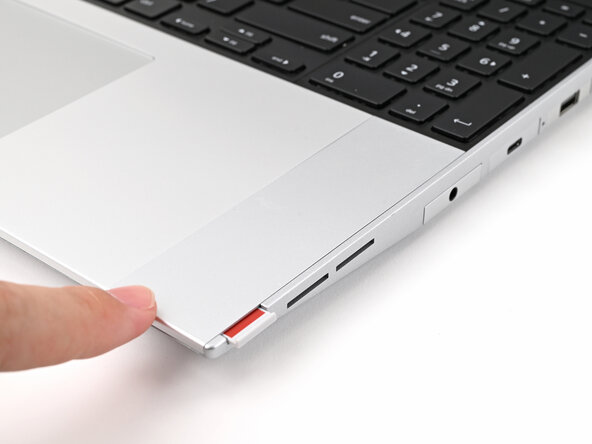
- Use your fingernail to pull out the two Input Module latches and unlock them.
- The latch will show red if it's unlocked.
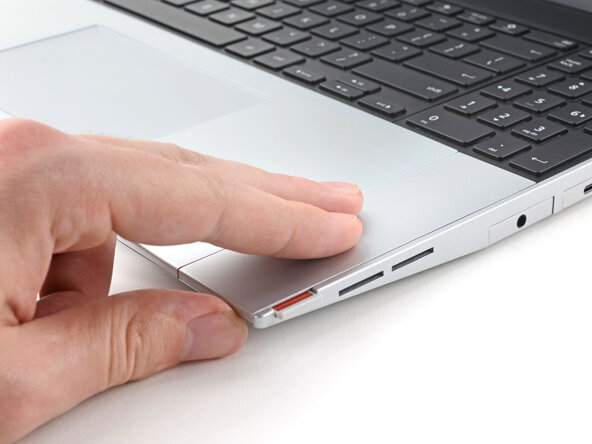
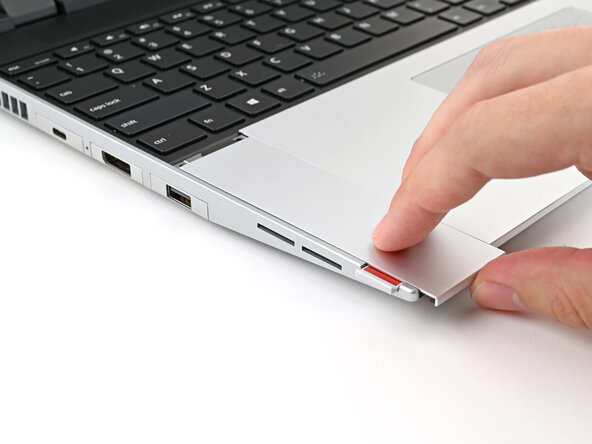
- Use your fingers to slide the Touchpad Spacer toward the bottom edge of the laptop and unclip it.
- If you're having trouble, check if the corresponding Input Module latch is properly unlocked.
- Lift the Touchpad Spacer off the laptop and remove it.
- Repeat the same procedure for the other touchpad spacer.
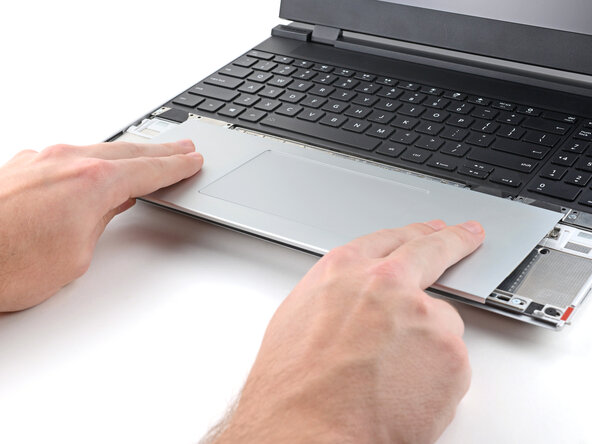
- Use your fingers to slide the Touchpad Module toward the bottom edge of the laptop and disconnect it.
- If you're having trouble, check if the Input Module latches are properly unlocked.
- Lift the Touchpad Module and remove it.
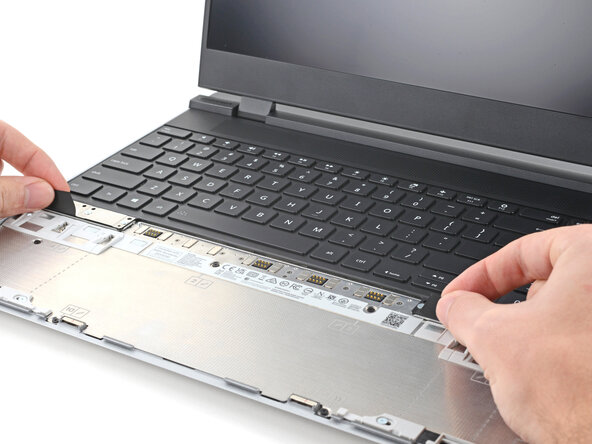
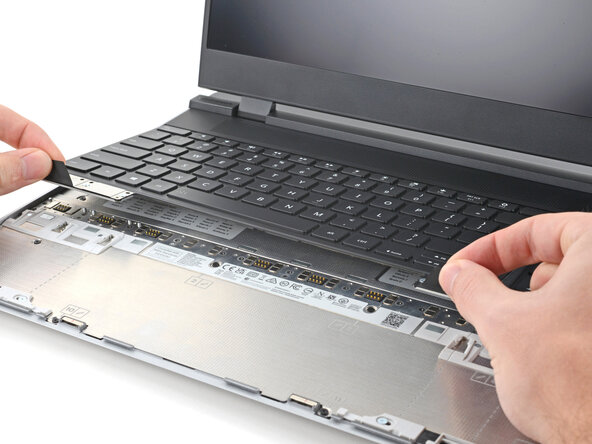
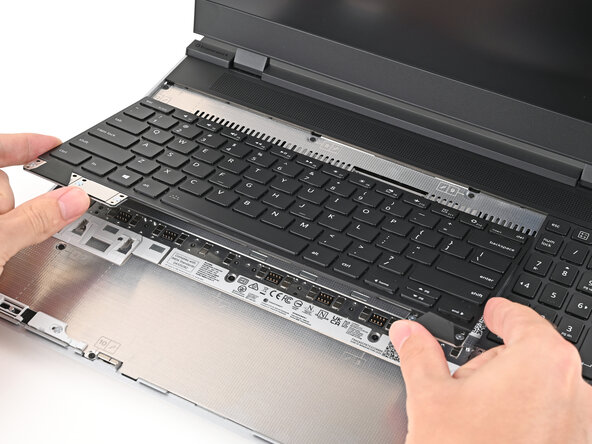
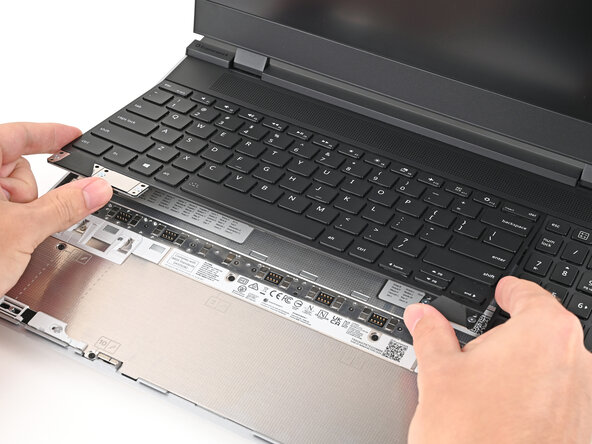
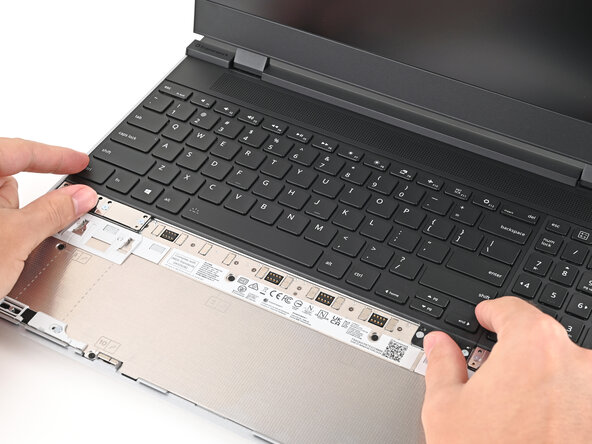
- The keyboard is held in place with strong magnets. Apply gradually increasing force to avoid having the keyboard violently eject.
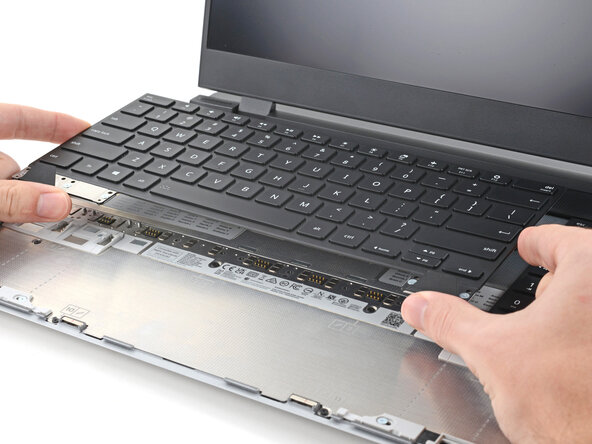
- Grip the two pull tabs along the bottom of the keyboard and lift until its magnets release.
- Remove the keyboard.
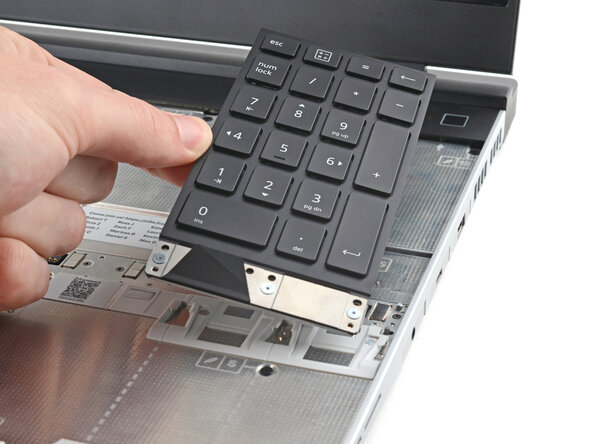
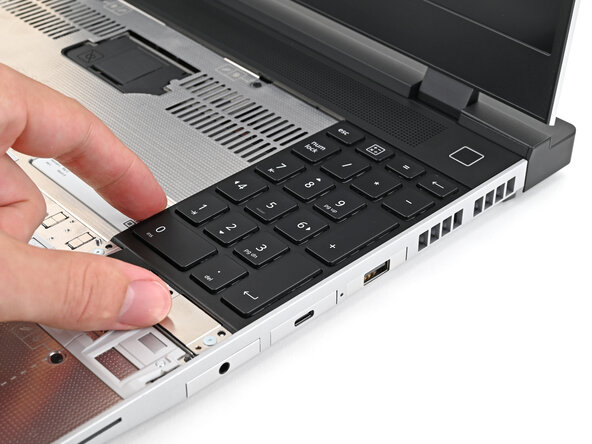
- Your Input Module(s) might be different, but the procedure to remove them is the same.
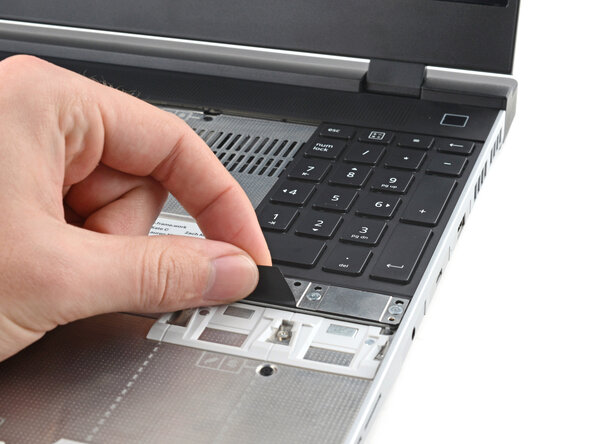
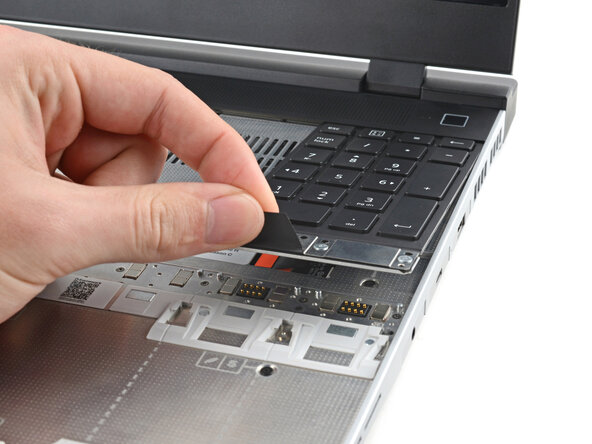
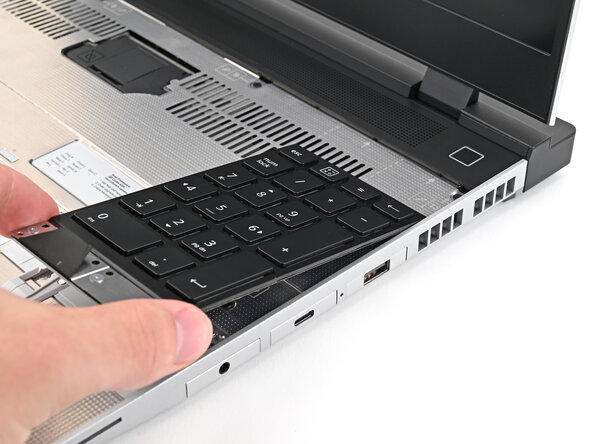
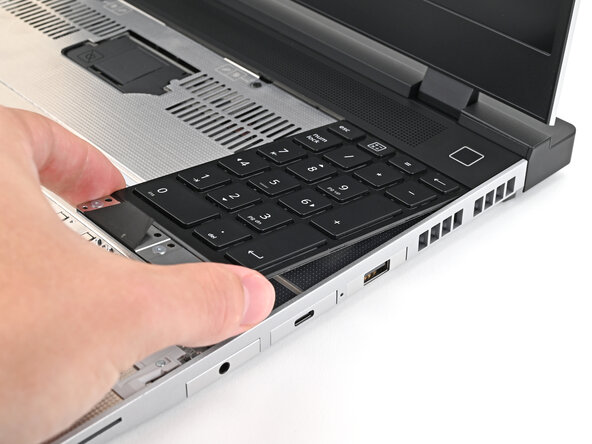
- Grip the pull tab at the bottom of the Input Module and lift until its magnets release.
- Remove the Input Module.
- Repeat for any remaining Input Modules.
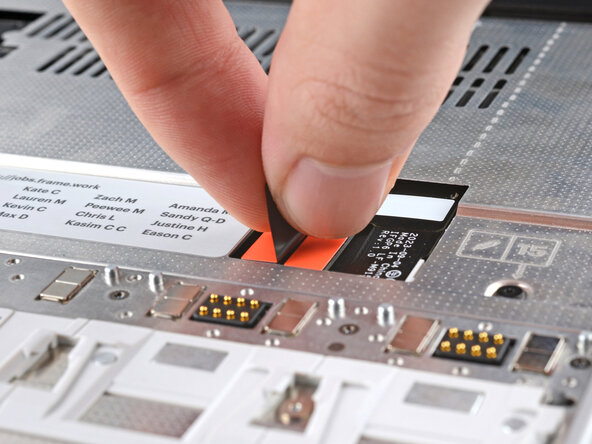
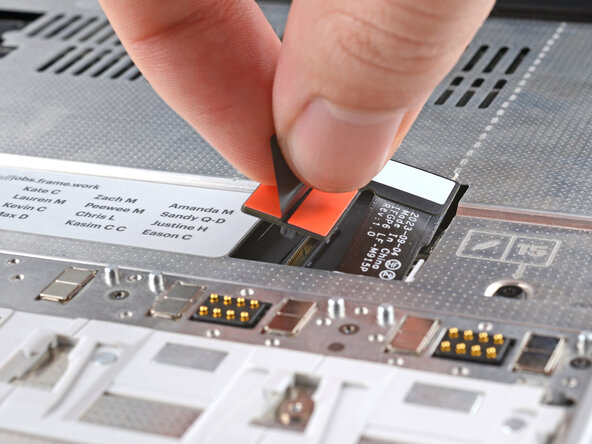
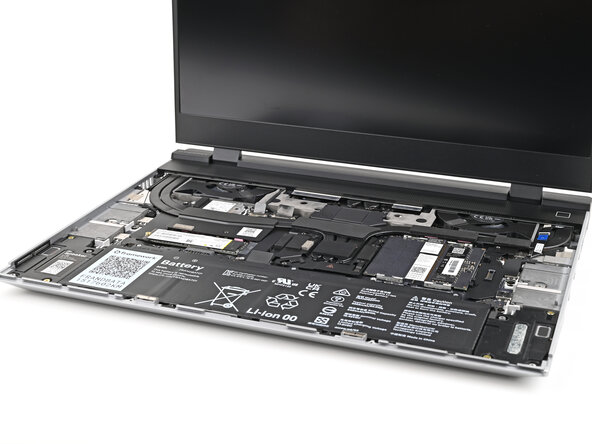
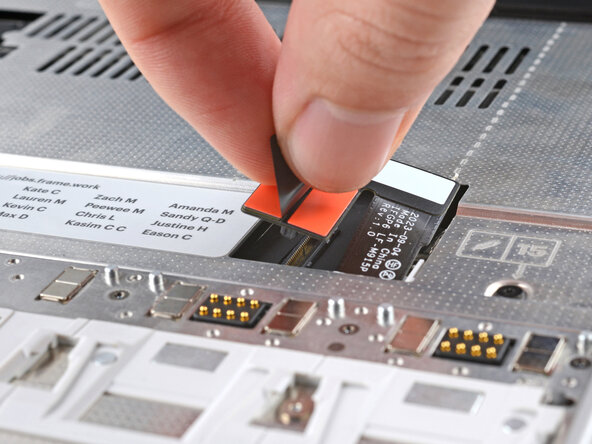
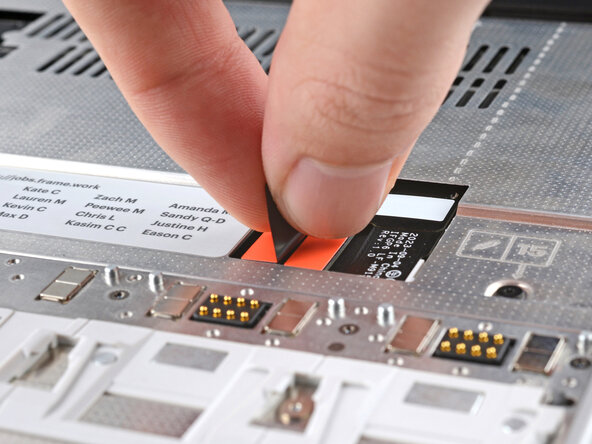
- Grip the black pull tab on the Mid Plate cable press connector.
- Lift up to disconnect the Mid Plate cable.
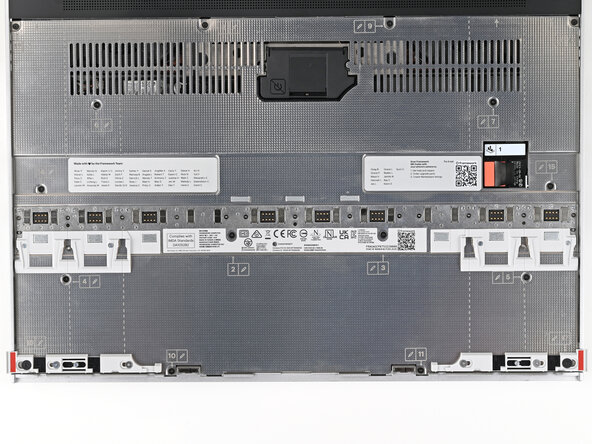
- The Mid Plate screws are ordered from 2–17 (number 1 is the press connector). You don't have to follow the order, but you can use it to help keep track of the screws you've loosened.
- Use your Framework Screwdriver to loosen the 16 captive T5 Torx screws securing the Mid Plate.
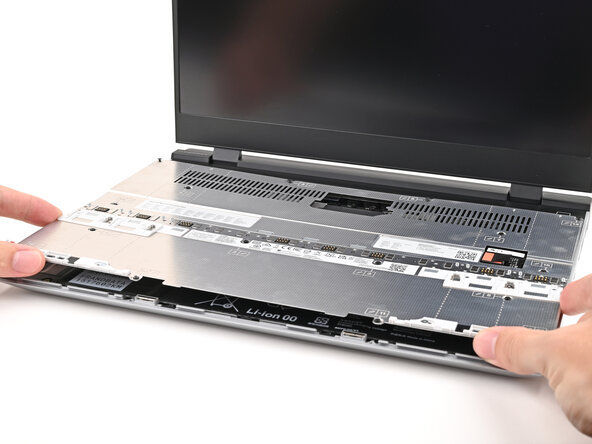
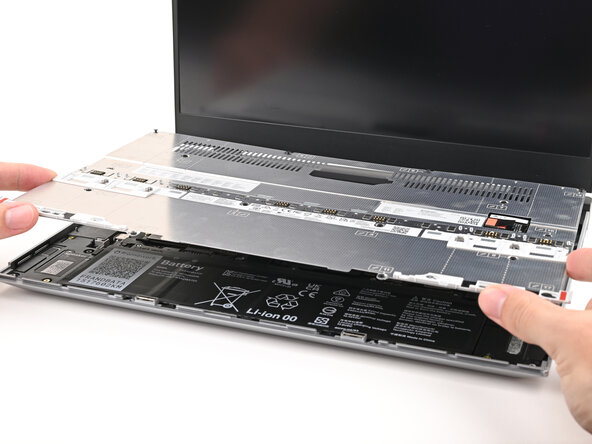
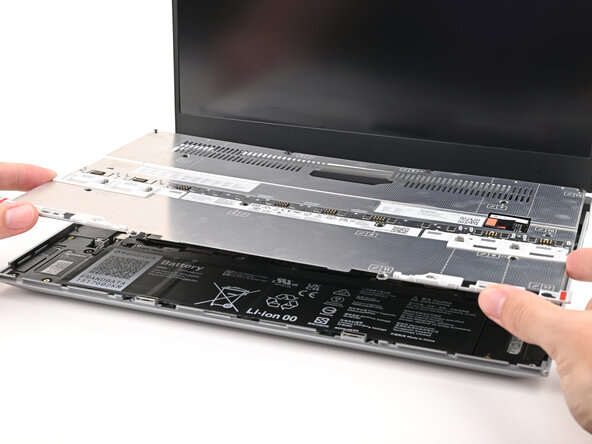
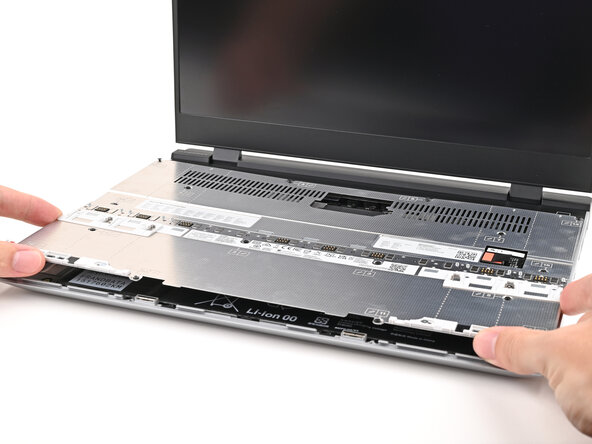
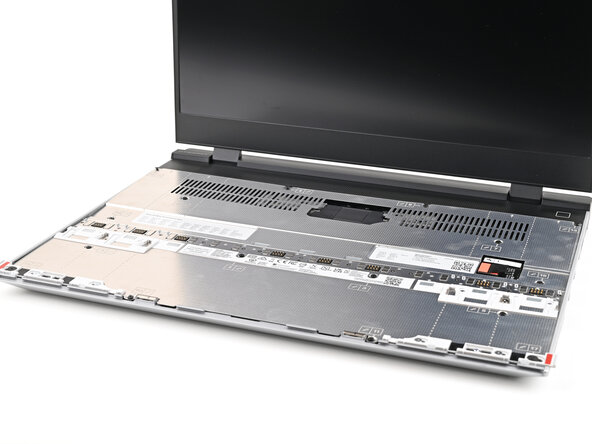
- Use your fingers to lift the Mid Plate off the laptop and remove it.
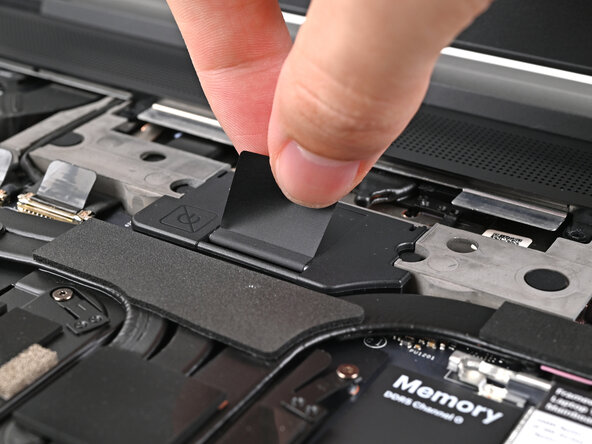
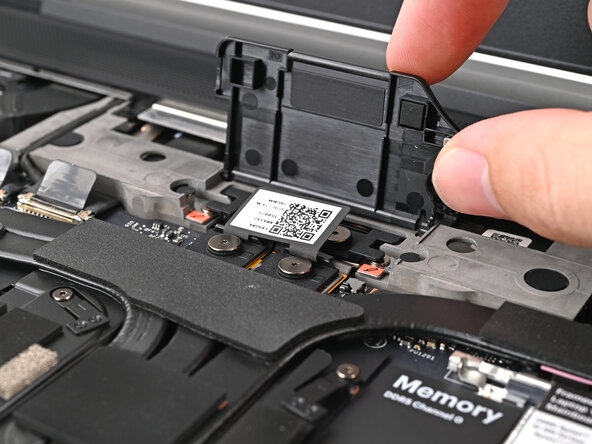
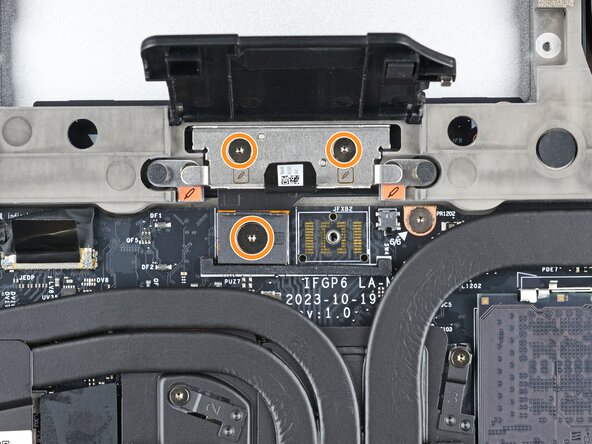
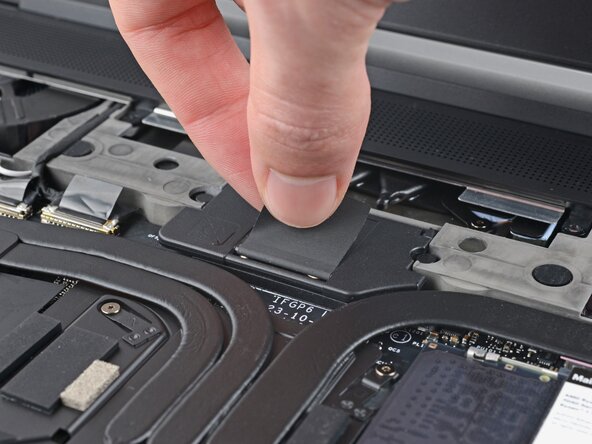
- Lift the interposer door by its black pull tab and let it rest upright.
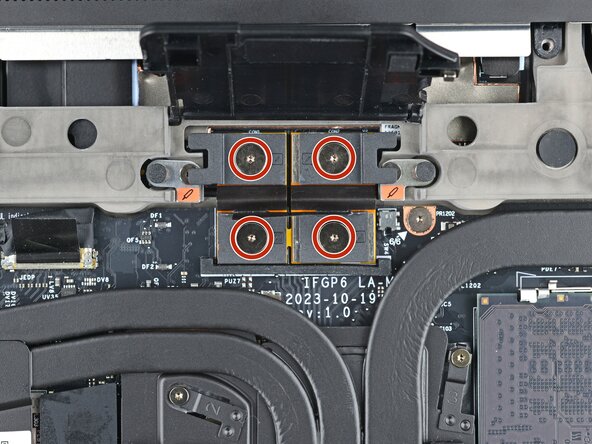
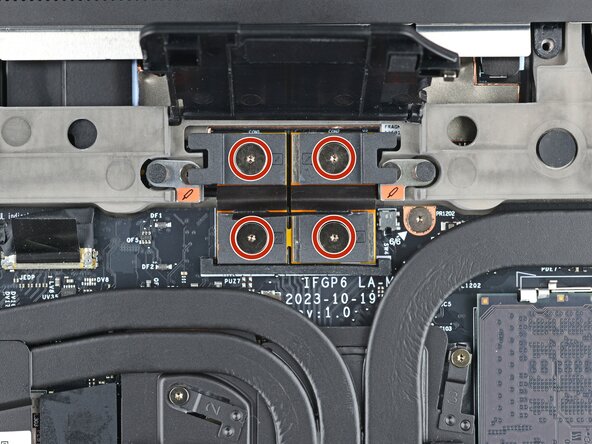
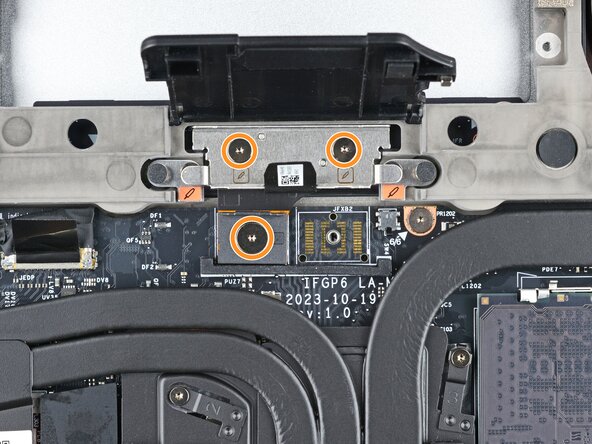
- If you have the Graphics Module installed, your interposer will have four screws. If you have the Expansion Bay Shell installed, you'll have three screws instead.
- If you have the Graphics Module, use your Framework Screwdriver to loosen the four captive T5 Torx screws securing the interposer.
- If you have the Expansion Bay Shell, use your Framework Screwdriver to loosen the three captive T5 Torx screws securing the interposer.
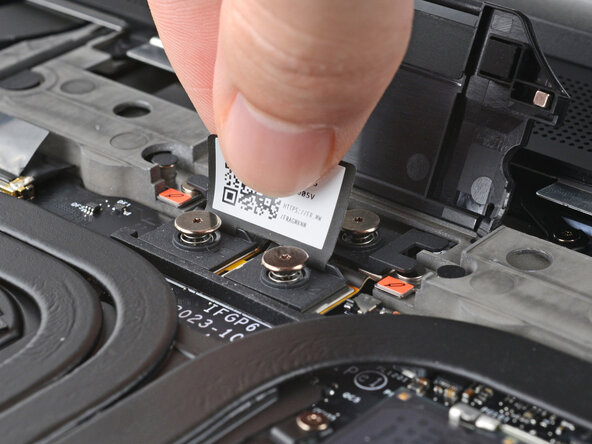
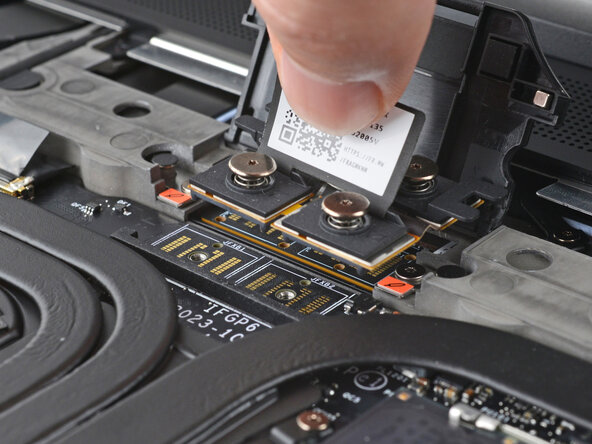
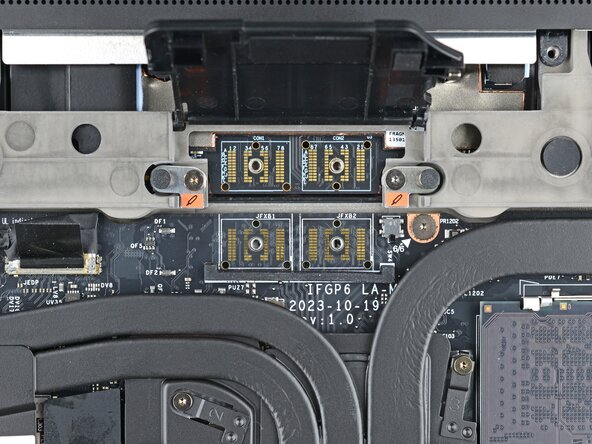
- Lift the interposer by its pull tab and remove it.
- Use your Framework Screwdriver to loosen the two captive T5 Torx screws securing the module in the Expansion Bay.
- Close the interposer door before continuing.
- Close your laptop and flip it over.
- Slide the Expansion Bay Module out of the laptop and remove it.
- The module should slide out easily. If you feel any resistance, check if the screws holding it in place are fully loosened.
- Flip your laptop and reopen it.
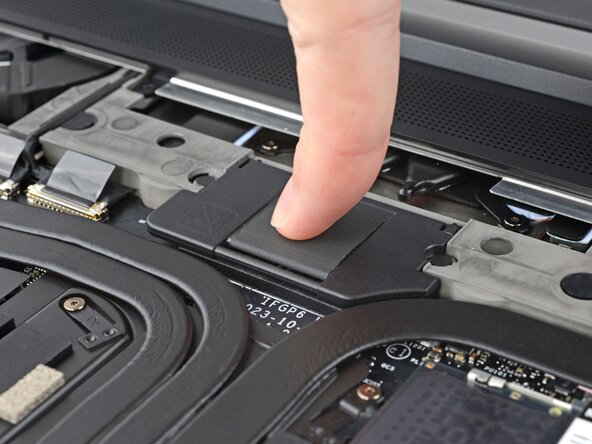
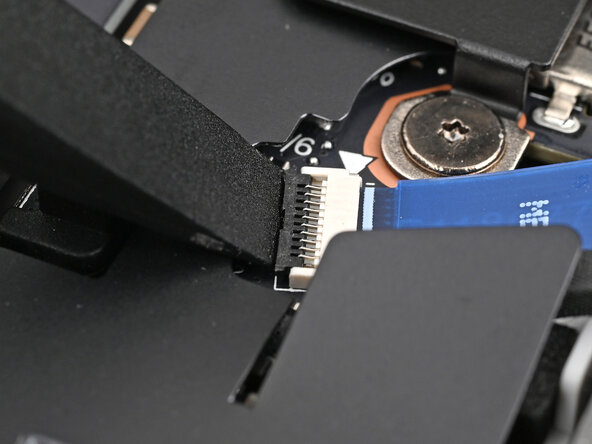
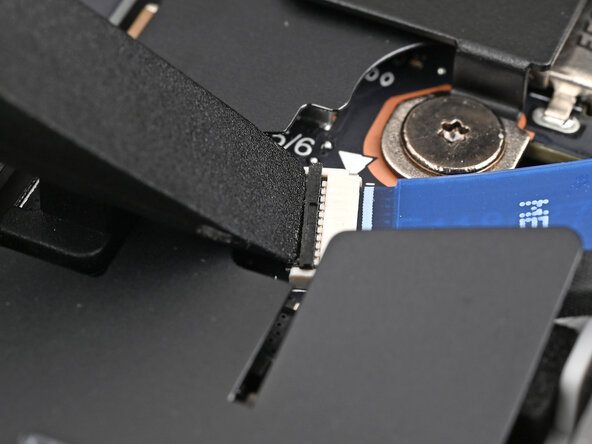
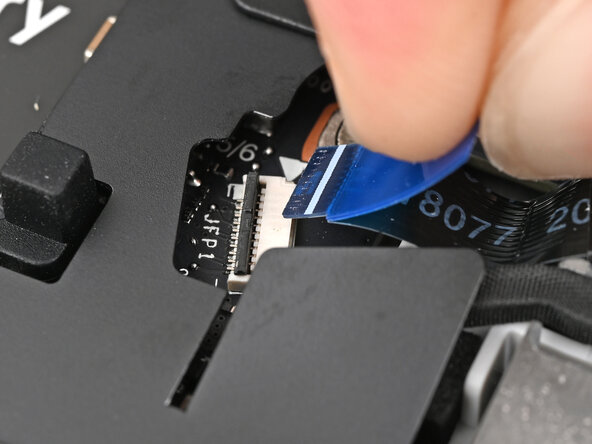
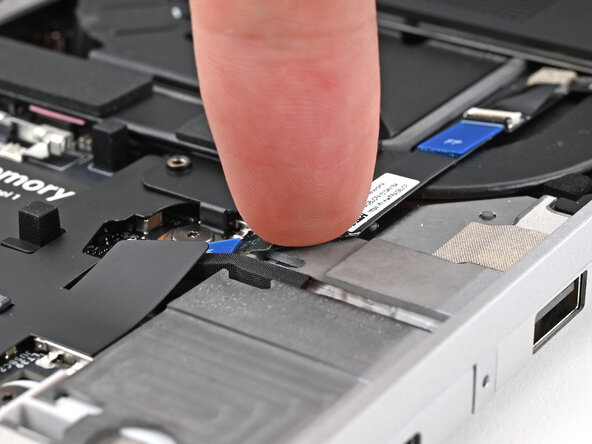
- Use the flat end of your Framework Screwdriver, or a clean fingernail, to lift up the locking tab on the fingerprint reader ZIF connector next to the memory.
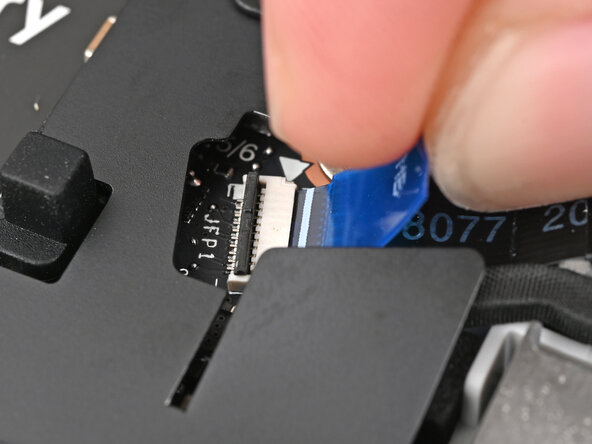
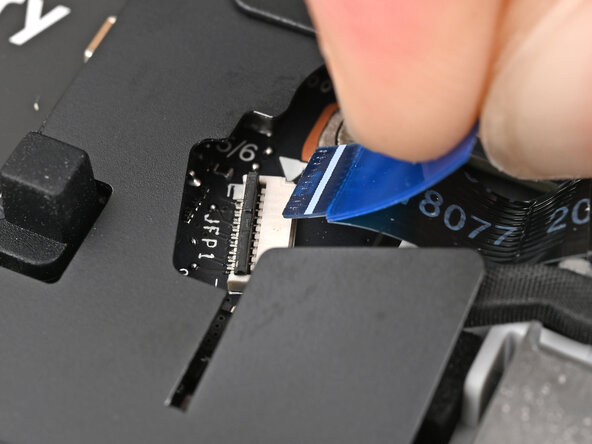
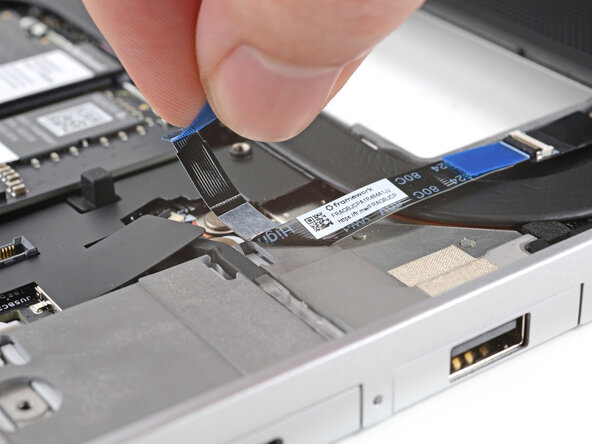
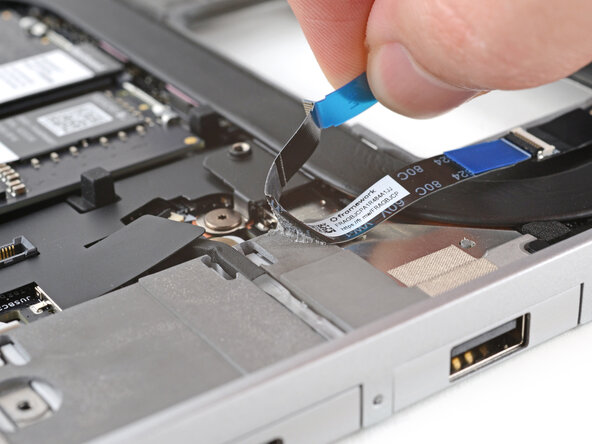
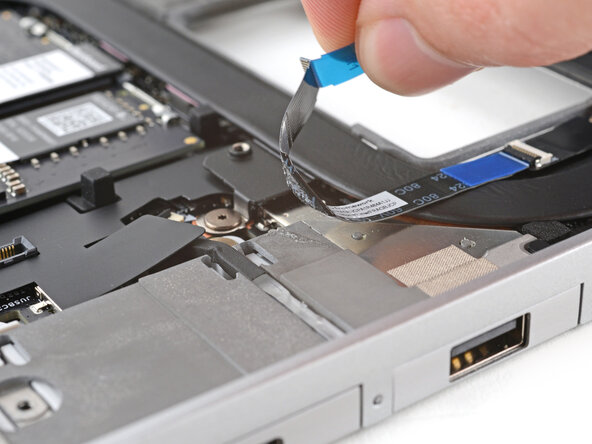
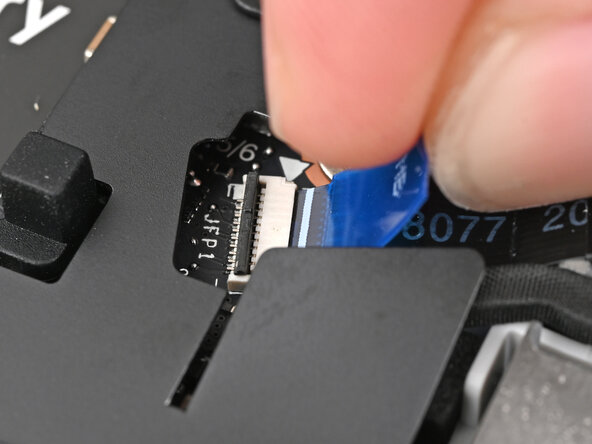
- Use your fingers to grip the blue pull tab and slide the fingerprint reader cable straight out of its socket.
- The fingerprint reader cable is lightly adhered to the laptop's frame.
- Use your fingers to peel the fingerprint reader cable away from the frame and separate the adhesive.
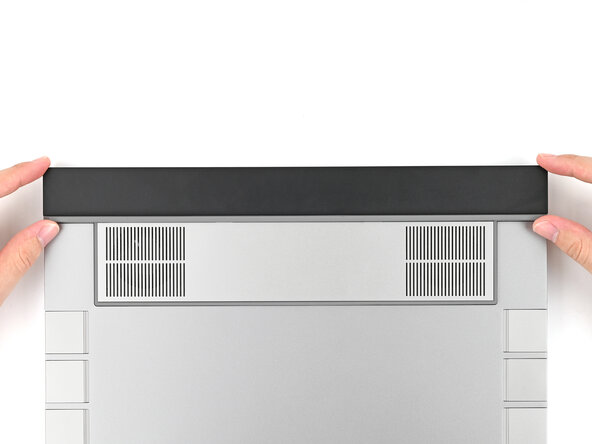
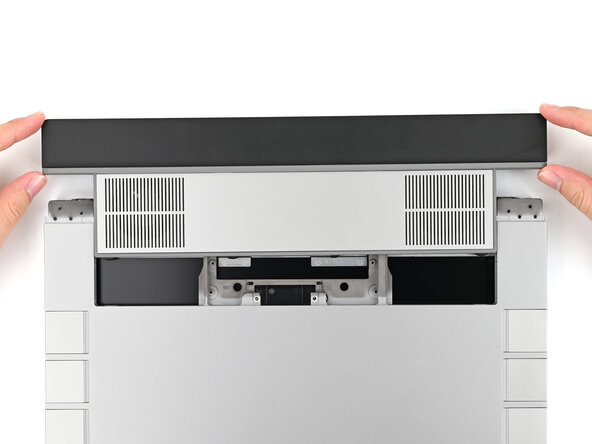
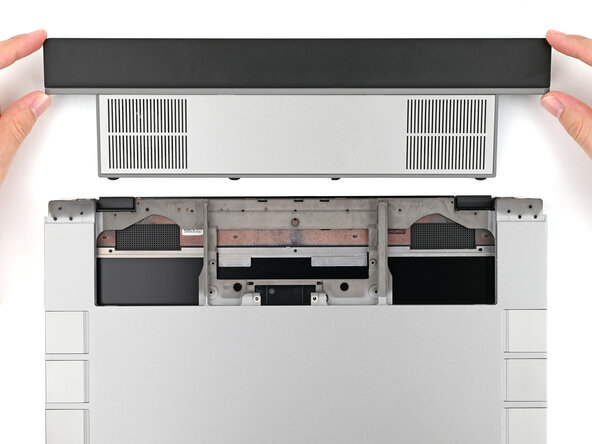
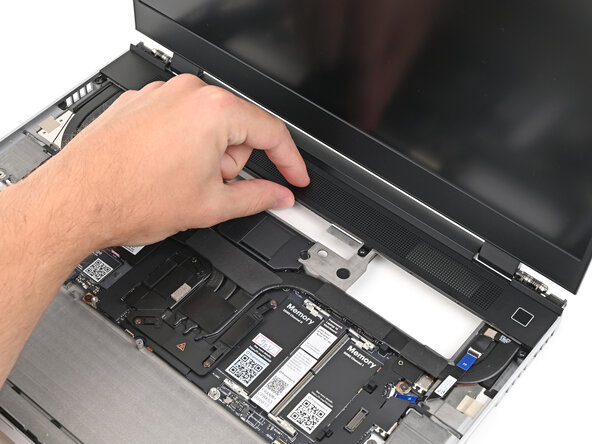
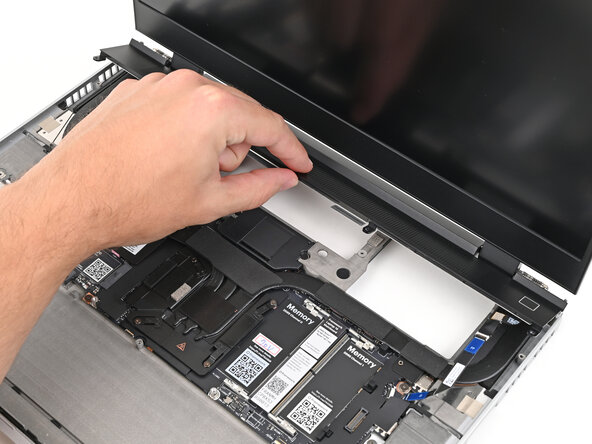
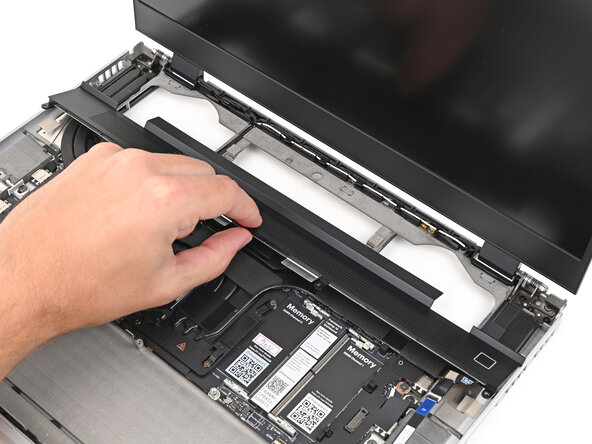
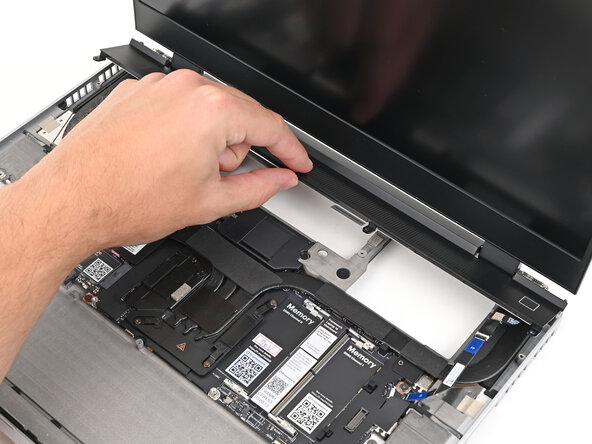
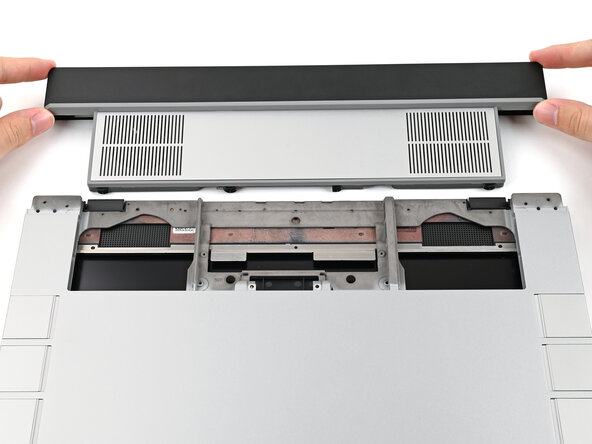
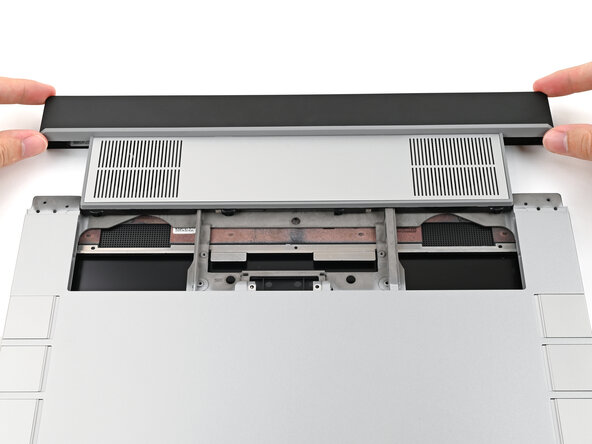
- The ventilation plate is held in place with magnets.
- Lift the bottom of the ventilation plate and pull it away from the laptop until the magnets release.
- Remove the ventilation plate.
- Use your Framework Screwdriver to loosen the captive T5 Torx screw securing Wi-Fi module.
- The module might pop up at a shallow angle when you loosen the screw.
- Slide the clear plastic cover straight off the module and remove it.
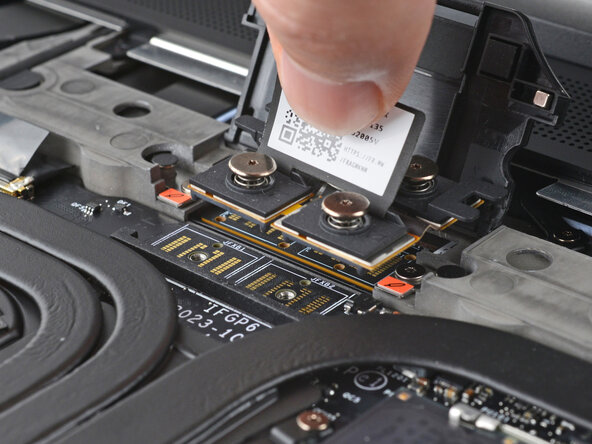
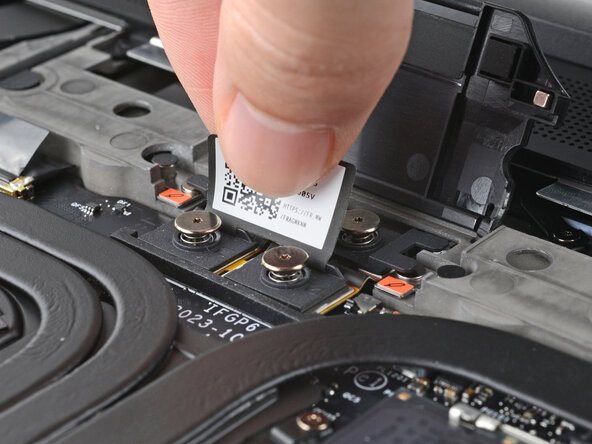
- While holding the Wi-Fi module down, insert the flat end of your Framework Screwdriver one of the coaxial connectors, where the cable meets the metal head.
- Lift the screwdriver straight up to disconnect the coaxial cable.
- Repeat for the other coaxial cable.
- The bezel is secured with magnets.
- Slide your fingernail under the inside edge of either bottom corner of the bezel.
- Pull the bezel away from the screen to release the first few magnets.
- Lift the bezel around the perimeter of the screen until all of its magnets are released.
- Remove the bezel.
- Grip the eDP cable connector to the right of the Wi-Fi module slot by its pull tab and lift up to disconnect it.
- Repeat for the webcam cable connector next to it.
- Lift the eDP, webcam, and antenna cables out of their vertical slot in the Bottom Cover.
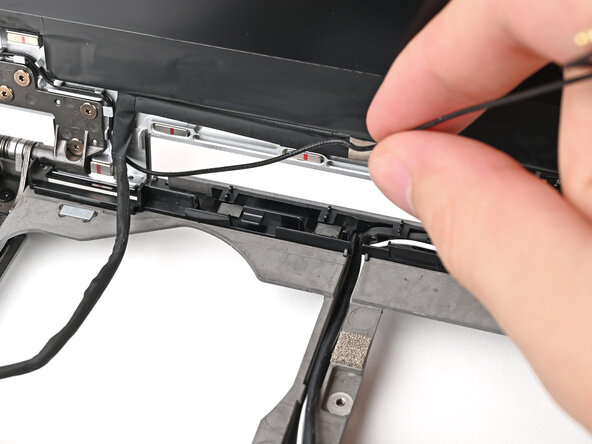
- Use your fingers to guide the eDP cable out of its clips along the top left edge of the Bottom Cover.
- Repeat the previous step for the black antenna cable.
- Use your fingers to guide the white antenna cable out of its clips along the top right edge of the Bottom Cover.
- Repeat the previous step for the webcam cable.
- The eDP cable is lightly adhered to the Top Cover at its "bend" near the bottom left corner.
- Grip the eDP cable near its bend and peel it off the Top Cover.
- While supporting the display with one hand, use your Framework Screwdriver to remove the four 2.4 mm‑long T5 Torx screws securing the display.
- Grab the display and pull it straight off the Top Cover to free it from its alignment pegs.
- Remove the display.
- Tilt the laptop backwards and let it rest on its Top Cover.
- While supporting the Bottom Cover with one hand, use your Framework Screwdriver to remove the five 2.4 mm‑long screws on each hinge connected to the Top Cover (10 total).
- Lift the Bottom Cover from the Top Cover and remove it.
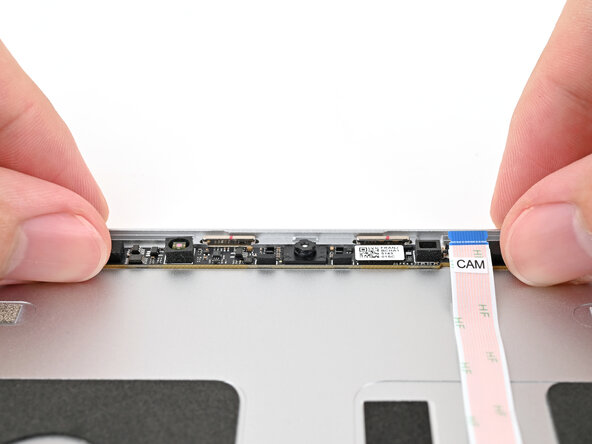
- Use the flat end of your Framework Screwdriver, or a clean fingernail, to lift up the locking tab on the webcam ZIF connector.
- Slide the flat end of your Framework Screwdriver under the webcam cable, near the ZIF connector, and twist to slide the connector out of its socket.
- Alternatively, you can use your fingers to slide out the cable.
- Use your Framework Screwdriver to remove the two 2.0 mm‑long T5 Torx screws securing the webcam.
- The washers underneath the screws are magnetic. If they come off with the screws, you can skip the next step.
- Use the magnetic tip of your Framework Screwdriver to pull the two washers off the Top Cover.
- Use your fingers to lift the webcam out of the Top Cover and remove it.
- Congratulations on completing disassembly! The remaining steps will show how to reassemble your Framework Laptop.
- Place the webcam into its spot on the Top Cover.
- Use your fingers to place the washers into their spots on the Top Cover.
- The washers only fit one way. If they're aren't fitting properly, flip them over.
- Use your Framework Screwdriver to install the two 2.0 mm‑long T5 Torx screws securing the webcam.
- Use your fingers to slide the webcam cable into its socket.
- Use the flat end of your Framework Screwdriver, or a clean fingernail, to press down the locking tab on the webcam ZIF connector.
- Place the Bottom Cover over the Top Cover, making sure the hinges are slotted into their alignment pegs.
- While supporting the Bottom Cover with one hand, use your Framework Screwdriver to install the five 2.4 mm‑long screws on each hinge connected to the Top Cover (10 total).
- Tilt the laptop forwards and let it rest on its Bottom Cover.
- Align the display with its alignment pegs and place it on the Top Cover.
- While supporting the display with one hand, use your Framework Screwdriver to install the four 2.4 mm‑long T5 Torx screws securing the display.
- Press the bend in the eDP cable onto the Top Cover to re‑adhere it.
- Use the flat end of your Framework Screwdriver, or your fingers, to press the webcam cable into its clips at the top right edge of the Bottom Cover.
- Repeat the previous step for the white antenna cable.
- Use the flat end of your Framework Screwdriver, or your fingers, to press the black antenna cable into its clips at the top left edge of the Bottom Cover.
- Repeat the previous step for the eDP cable.
- Press the eDP, webcam, and antenna cables into their vertical slot in the Bottom Cover.
- Press the eDP and webcam cable connectors straight down into their sockets to connect them.
- Align the bezel over the perimeter of the display and let the magnets pull the bezel into place.
- The bezel should "snap" into place. If it doesn't, realign it and make sure it sits flush with the display.
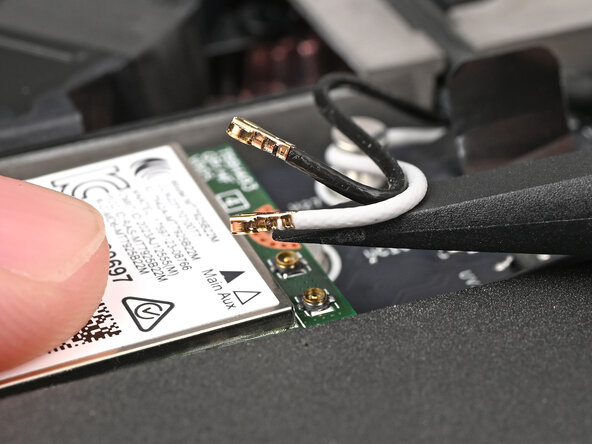
- Hold the Wi-Fi module down with your finger.
- Position the white antenna cable connector over the left Wi-Fi module's coaxial socket.
- If you're unsure which cable goes where, refer to the arrows on the Wi-Fi module for which color cable matches with its connector.
- Tweezers can help position the connector.
- Use your finger to press the connector into place. You should feel a faint click, and the cable will stay attached to the socket by itself.
- These connectors are very delicate! If the connector doesn't feel like it's clicking in place, reposition the connector and try again.
- Repeat the procedure with the black antenna cable.
- Slide the clear plastic cover on the module and align its screw with the screw hole cutout.
- Use your Framework Screwdriver to tighten the captive T5 Torx screw securing Wi-Fi module.
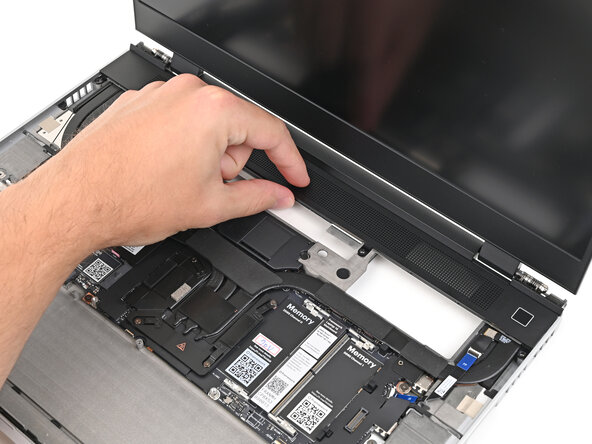
- Lay the ventilation plate along the top edge of the laptop and let its magnets pull into place.
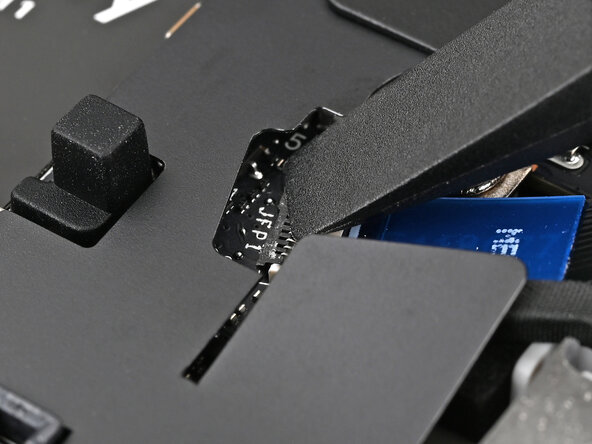
- Use your fingers to grip the blue pull tab and slide the fingerprint reader cable straight into its socket.
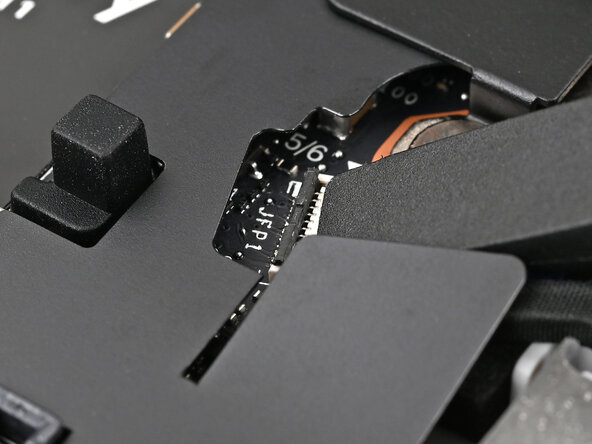
- Use the flat end of your Framework Screwdriver, or a clean fingernail, to press down the locking tab on the fingerprint reader ZIF connector.
- Press the fingerprint reader cable to the frame to re-adhere it.
- Close the interposer door.
- If you have the Graphics Module installed, your interposer will have four screws. If you have the Expansion Bay Shell installed, you'll have three screws instead.
- If you have the Graphics Module, use your Framework Screwdriver to tighten the four captive T5 Torx screws securing the interposer.
- If you have the Expansion Bay Shell, use your Framework Screwdriver to tighten the three captive T5 Torx screws securing the interposer.
- Close the interposer door.
- Place the interposer over its spot between the Mainboard and the module.
- Depending on if you're installing a Graphics Module or the Expansion Bay Shell, the interposer should be oriented so either rubber grommets or metal tabs cover the Expansion Bay screws.
- Use your Framework Screwdriver to tighten the two captive T5 Torx screws securing the Expansion Bay Module.
- Close your laptop and flip it over.
- Align the Expansion Bay Module with its slot in the laptop.
- Check that the module sits evenly with the rail on the outside edges of the slot.
- Check that the two center rails are threaded between the fans.
- Place the Mid Plate on the laptop, making sure it sits evenly on its alignment pegs.
- Use your Framework Screwdriver to tighten the 16 captive T5 Torx screws in order (starting with 2) to secure the Mid Plate evenly.
- Align the Mid Plate cable press connector over its socket and press down to connect it.
- Your Input Module(s) might be different, but the procedure to remove them is the same.
- Align the top edge of the Input Module with the top edge of the laptop.
- Lay the Input Module on the laptop and let the magnets pull the keyboard into place
- Make sure the Input Module is seated properly on its alignment pegs and sits flush with the edges of the laptop.
- Repeat for any remaining Input Modules.
- Align the top edge of the keyboard with the top edge of the laptop.
- Lay the keyboard on the laptop and let the magnets pull the keyboard into place
- Make sure the keyboard is seated properly on its alignment pegs and sits flush with the edges of the laptop.
- Place the Touchpad Module flat on its cutout so its clips are properly aligned.
- Press the Touchpad Module down and slide it into place so it lines up evenly with the bottom edge of the laptop.
- Place the Touchpad Spacer over its spot on the laptop with the bottom edge overhanging slightly.
- Slide the Touchpad Spacer towards the top of the laptop to secure it.
- Repeat the same procedure for the other Touchpad Spacer.