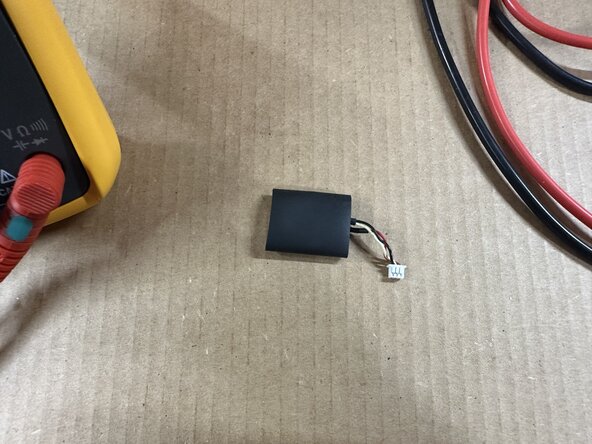
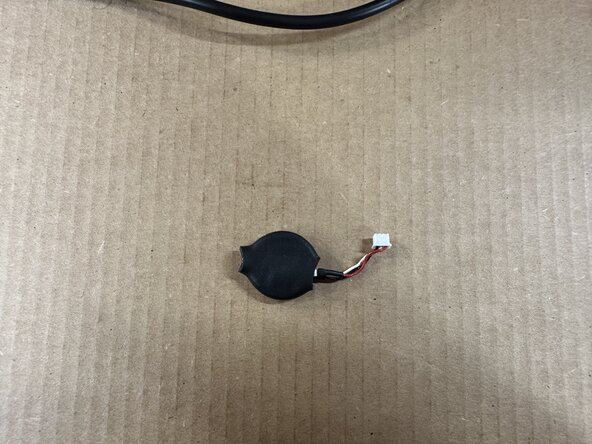
CMOS Battery rebuild amendment - amended procedure for cheap DMMs, pre tabbed
ID: 218749
Description:
Steps:
- No meters worth keeping were destroyed for this guide to show why I did this — the large LCD unit already broke prior and the MCH-108 has a false CAT rating but was not destroyed.
- Blacklisted meters:
- iFixit sold: MCH-108/any MCH meter - Reason: Calibration lottery — my 2 from two meters from the RBT kits show 5.012V (CatIII), 5.003V (CatIV); Digital Multimeter IF145-035-1 -- Reason: DT/XL830 class meter; manual ranging 3 1/2 digit average responding.
- 3rd party: DT/XL830 -- same as iFixit IF145-035-1; UNI-T -- Reason: Slow testing, possible calibration lottery where some are out of spec and not properly calibrated, multiple meters with exaggerated Cat ratings; Harbor Freight 7 function DMM -- reason: 830 class meter.
- The reason I am putting these meters in their own group beyond slow continuity testers, iffy factory calibrations and accuracy issues? Safety. I tore one broken unit down (don't worry, $10 in 2022 money) and a working MCH-108 from my RBT to show how many shortcuts get taken with these and how dangerous they can be to use beyond DC LV work.
- These meters also frequently lie about which functions use True RMS (TRMS) - even the iFixit MCH-108 is TRMS AC, Averaging DC -- this is never disclosed.
- Fake CAT ratings are normal: Even the iFixit MCH-108 is Cat IV on the meter, but has none of the features of a true Cat IV like a Fluke 174/3000 CNX or Fluke 3000 FC.
- China Export: Most of these have the "China Export" mark, not the true CE mark.
- The reason I have quarantined these lower tier meters to this guide is they tend to be all over the map for accuracy. To show how variable these get very quickly I put a fresh CR2032 against 4 meters. These meters will work but you need to account for any errors which may occur on them as much as possible.
- Fluke 115 -- 3.306V DC
- Fluke 3000 FC -- 3.307V DC
- iFixit CM-D20 -- 3.309V DC
- AstroAI DM6000AR -- 3.294V DC
- This amendment is limited in scope to the following DMMs:
- Any meter which has questionable accuracy that would fail in the non amended guide
- Cheap meters from Amazon and Harbor Freight that are built around shortcuts, especially older HF meters where safety was an afterthought in the design
- Super low cost meters built to a price, such as the ones from Amazon, Walmart, Harbor Freight, and super cheap ones from Ace Hardware
- Before you start, if you are running the no name pack-ins, discard these batteries and install a name brand pair. Most of the time these batteries in-box are aged as they were sitting for a while and should be replaced to avoid false positives.
- Discard these batteries
- Install good name brand batteries (Alkaline or 1.5V Primary Lithium both work) before continuing with this guide
- Authors note: The minimum recommended meter I would suggest using for this guide (if possible) is 6000 count - a reliable 4000 count meter is fine, but you will need to be more particular about the meter's actual accuracy before using it.
- As the disaplayed voltage may be inaccurate, inconsistent or set too high to go off on many of these meters, you must test the cell over a longer window.
- After sealing the cell, you must hold your test leads on the connector for 1-2 minutes and watch the voltage
- Unstable voltages/regular voltage drop: This is a dead short. Disassemble the cell and start over. The indicator for this is a <0.1-0.2V drop from initial cell testing after applying tape.
- Unstable reading - last 1-2 digits: Unstable or inaccurate readings (as shown with my DC reference - 10V) indicate a low-quality meter, poor calibration, or a failing coin cell. If available, verify with a voltage reference. If it persists, replace the meter with a higher quality True RMS model (ex: Commercial Electric/HD or Kobalt/Lowes).
- Minor errors: This is fine as a lot of sub $100 meters use ADCs with issues on the last 1-2 digits (often known insignificant digits). Ignore these last 2 and focus on the first 2 digits that matter (3.X). As long as it is otherwise accurate these last two are rarely accurate to begin with in this class.
- If you suspect the calibration on the meter is suspect, use a reference like this to quickly verify the meter. If the drift is similar, your meter has a horrible calibration and the rebuild might be okay. A fresh 9V battery will work as well, but it is not a reliable reference grade source.
- If the meter is really wonky and you have a voltage reference like the example shown, test it to see how many digits off are expected vs a build issue.
- After confirming there is no assembly short, let the cell sit on your bench for 3-5 minutes before heatshrink sealing and installation. As long as it does not get hot after being allowed to cool to room temprature, it is safe to install.